

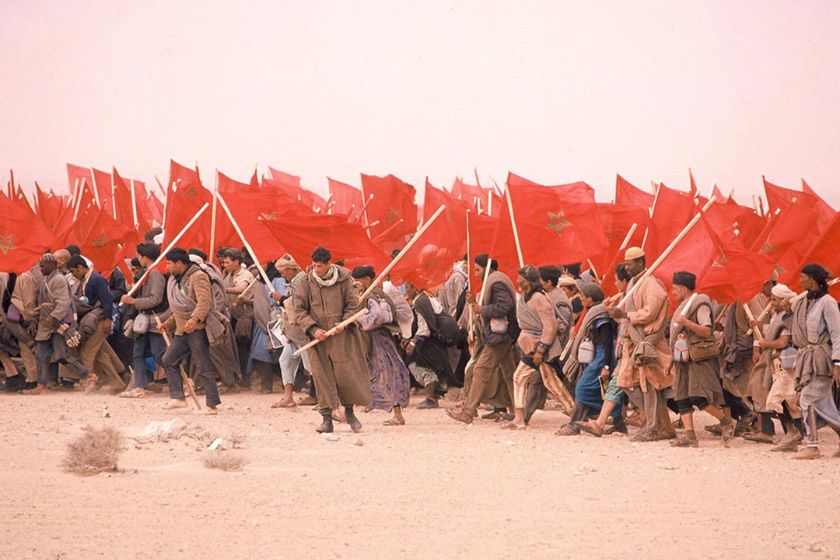
The resolution on the Sahara establishes autonomy as the only credible path forward. This is a major diplomatic triumph for Morocco, coinciding with the fiftieth anniversary of the Green March. Shoelifer explains why this moment is truly historic.
Adopted on October 31, 2025, Resolution 2797 on the Sahara marks a turning point. For the first time, the UN Security Council has recognized Morocco’s autonomy plan as the basis for resolving the dispute. This historic text isthe result of twenty years of painstaking diplomacy, but also the start of something more concrete: renewed negotiations, a redefined UN role, and the presentation of an updated and expanded for autonomy by Morocco.
On November 4, in a statement from the Royal Cabinet, King Mohammed VI gave the resolution a highly symbolic and political dimension by declaring October 31 “Unity Day” (Aid Al Wahda), a national holiday and new occasion for royal pardons. This is a date sure to become a lasting symbol of Morocco’s national unity and territorial integrity.
What the Sahara resolution changes
Since 2007, Security Council resolutions have praised Morocco’s “serious and credible efforts.” This new resolution goes further: it establishes Morocco’s plan for autonomy as the foundation for negotiationa, referring explicitly to “genuine autonomy under Moroccan sovereignty.”
The text no longer mentions a referendum,an option still claimed by the Polisario and Algeria. The UN now acknowledges that any settlement will come not from a vote on independence, but from a negotiated political agreement.
The results of the the Security Council vote, 11 votes in favor, 0 against, and 3 abstentions (China, Russia, Pakistan), underscores Morocco’s growing diplomatic strength. For a resolution to pass, at least nine votes are needed with no veto from any of the five permanent members (the United States, France, the United Kingdom, China, and Russia). The Council also includes ten non-permanent members, elected for two-year terms and renewed by half each year.
In this context, Morocco secured a clear majority, backed by Washington, Paris, London, Seoul, Copenhagen, and Ljubljana. Algeria, a non-permanent member, refused to take part in the vote — a telling sign of its diplomatic isolation.
The coming big bang
The Sahara resolution now commits Morocco to update its plan for autonomy. The 2007 version already envisions an elected legislative assembly, a regional government, a local judiciary, and broad powers over taxation, development, environment, culture, infrastructure, health, and education. The state would retain sovereign prerogatives, such as defense, foreign policy, religion, the flag, and the currency.
King Mohammed VI announced that the plan will be revised to incorporate the 2011 Constitution, the 2015 regionalization reform, and the 2021 development models. This effort represents nothing less than an institutional paradigm shift. It will require redefining the distribution of powers and resources — going far beyond the current framework of decentralization.
Why the negotiations will take place in the United States
The Sahara resolution explicitly mentions “recognition to the United States for its willingness to host meetings in support of the Personal Envoy’s mission.”
According to legal scholar and political analyst Mustapha Sehimi, that’s a clear signal: “It reflects Washington’s active involvement in restarting negotiations between the parties.”
Massad Boulos, special advisor to former President Donald Trump, confirmed on France 24 Arabic that the four parties concerned — Morocco, the Polisario, Algeria, and Mauritania — will be invited to participate in talks “without preconditions.”
According to him, the United States “is counting on the wisdom of His Majesty King Mohammed VI and President Abdelmadjid Tebboune to approach this new phase constructively.”
The first American draft included a 60-day timeline and a short renewal of the MINURSO mandate; under Russian pressure, those clauses were removed. “No deadline has been set, but the process will accelerate,” explains Mustapha Sehimi. A strategic report from the UN Secretary-General is expected by April 2026, ahead of a new resolution in the fall.
Three possible scenarios
According to Mustapha Sehimi, Resolution 2797’s main point remains the revival of the settlement process, but several paths are still open:
1 / Effective resumption of negotiations:
This is the preferred option. Although resistant, Algeria has already taken part in two round tables (Geneva 2018 and 2019). Should it accept the US invitation, dialogue could begin as early as the first half of 2026. According to this framework, the Moroccan plan would serve as the primary benchmark, with room to adjust the details of the implementation of the plan for autonomy..
2 / Algerian obstruction:
If Algiers continues to resist “its stance would become increasingly untenable,” says Sehimi. The United States could exert diplomatic and financial pressure on Algeria, such as freezing certain cooperative programs, reducing international aid, or politically isolating it in multilateral forums. Meanwhile, the pro-Moroccan consensus would continue to grow.
The Security Council, in theory, has the authority to act under Chapter VII of the UN Charter, meaning it could impose binding measures in case of a threat to peace: economic sanctions, embargoes, asset freezes, or peacekeeping deployments. But this remains purely hypothetical for the Sahara issue, which currently falls within the realm of political dialogue, not coercion.
3 / Prolonged status quo:
Maintaining MINURSO without political progress. This scenario is deemed increasingly unsustainable. It would undermine the credibility of both the Council and Washington, now committed to reviving the process.
The UN: A favorable framework for Morocco’s next vote
The Sahara resolution extends MINURSO’s mandate until October 31, 2026. That means by that date, the Security Council will have to vote again — not to redefine the political foundation (which is now undeniably Morocco’s plan ), but to evaluate progress: how negotiations are advancing, whether the ceasefire holds, and how engaged the four parties are.
In other words, the next vote will measure how the current resolution is being implemented and, , if necessary, adjust the MINURSO mandate or the mission of the Personal Envoy, Staffan de Mistura.
By then, the geopolitical landscape will have changed. Starting January 2026, seven new non-permanent members will join the Security Council for two years, alongside the five permanent ones (the United States, France, the United Kingdom, China, and Russia).
Among these newcomers are Bahrain, the Democratic Republic of the Congo, and Liberia, all countries that have already opened consulates in Laâyoune or Dakhla, recognizing Morocco’s sovereignty over the Sahara. Their arrival will strengthen the bloc of states supporting the autonomy plan, already backed by several European and African allies.
The result? Morocco will approach the next vote with a structurally favorable majority, supported both by African allies and major Western powers. “Morocco now enjoys unprecedented support: it has the legitimacy of the text, the backing of the great powers, and a solid African foundation,” summarizes Mustapha Sehimi.
On the ground: A reality already taking shape
While diplomacy lays the groundwork, development in Morocco’s Sahara is surging ahead. Over thirty foreign consulates have opened in Laâyoune and Dakhla. Major projects — the Dakhla Atlantic port, new roads, industrial zones, tourism developments, and renewable energy programs — are transforming the region into an African hub linking the Atlantic, the Sahel, and the Gulf of Guinea.
These investments, reinforced by the Sahara resolution,establish the ground what the UN now affirms politically: the irreversible integration of Morocco’s southern provinces into the Kingdom.
What comes next?
The coming months will be decisive:
- Finalization of the updated autonomy plan
- Preparatory consultations led by Staffan de Mistura
- US-hosted meetings between the four parties
- And the Secretary-General’s report before the next vote, expected in October 2026
The challenge now is no longer to convince; it is to build. It’s time to effectuate the plan for autonomy , strengthen alliances within the Council, and turn diplomatic success into tangible governance.
The Sahara resolution is not the end of a conflict, but the beginning of a new era. Morocco no longer needs to plead its case; it is now setting the terms.