


If there’s one topic that truly stresses parents, it’s school bullying. And for good reason: there’s nothing worse than feeling powerless in the face of our child’s suffering. Often, our instinct is to encourage them to fight back, but that isn’t the best way to help. Here’s why.
Panic mode! Our child comes home from school saying they’re being “bothered” during recess. Instinctively, we tell them not to let others walk all over them, to stand up for themselves, while bombarding them with phrases to reply with next time. But a child doesn’t grow strong just by listening to our words. They become strong by building self-confidence… and by trusting us, their parents.
Understanding bullying is the first step to tackling it. The widely accepted definition describes bullying as a form of psychological or physical violence that occurs over time, committed by one or more aggressors against someone who cannot defend themselves in that specific situation. A key aspect here is the repetitive nature of bullying. So, the first thing to do is to act quickly to prevent the situation from settling in and worsening.
There’s no ‘typical’ bullied child.
Context also matters. Helping a child understand that they are not excluded everywhere can prevent self-esteem from taking a hit. For instance, being picked on at school doesn’t stop them from being well-integrated into their sports club. It’s the environment that’s at fault here: the bullied student is a victim of group dynamics, well-known to foster the rise of violence. Studies have shown that when taken individually, bullies aren’t necessarily aggressive people. In fact, they may even be friendly with their victims outside of school.
Being bullied does not mean your child is “different.” No one is born to be a target. This can help ease parents’ stress, a necessary step to support their child calmly. School bullying, whether among perpetrators or victims, can affect anyone without discrimination. This also explains why peers often remain silent when witnessing a student’s violent behavior, fearing they might become the next target.
Read also : TANALAND, THE IMAGINARY LAND OF FEMINISTS
Now that we understand this, what’s next?
Here are four things to avoid if you find yourself in this situation.
Avoid… contacting the parents
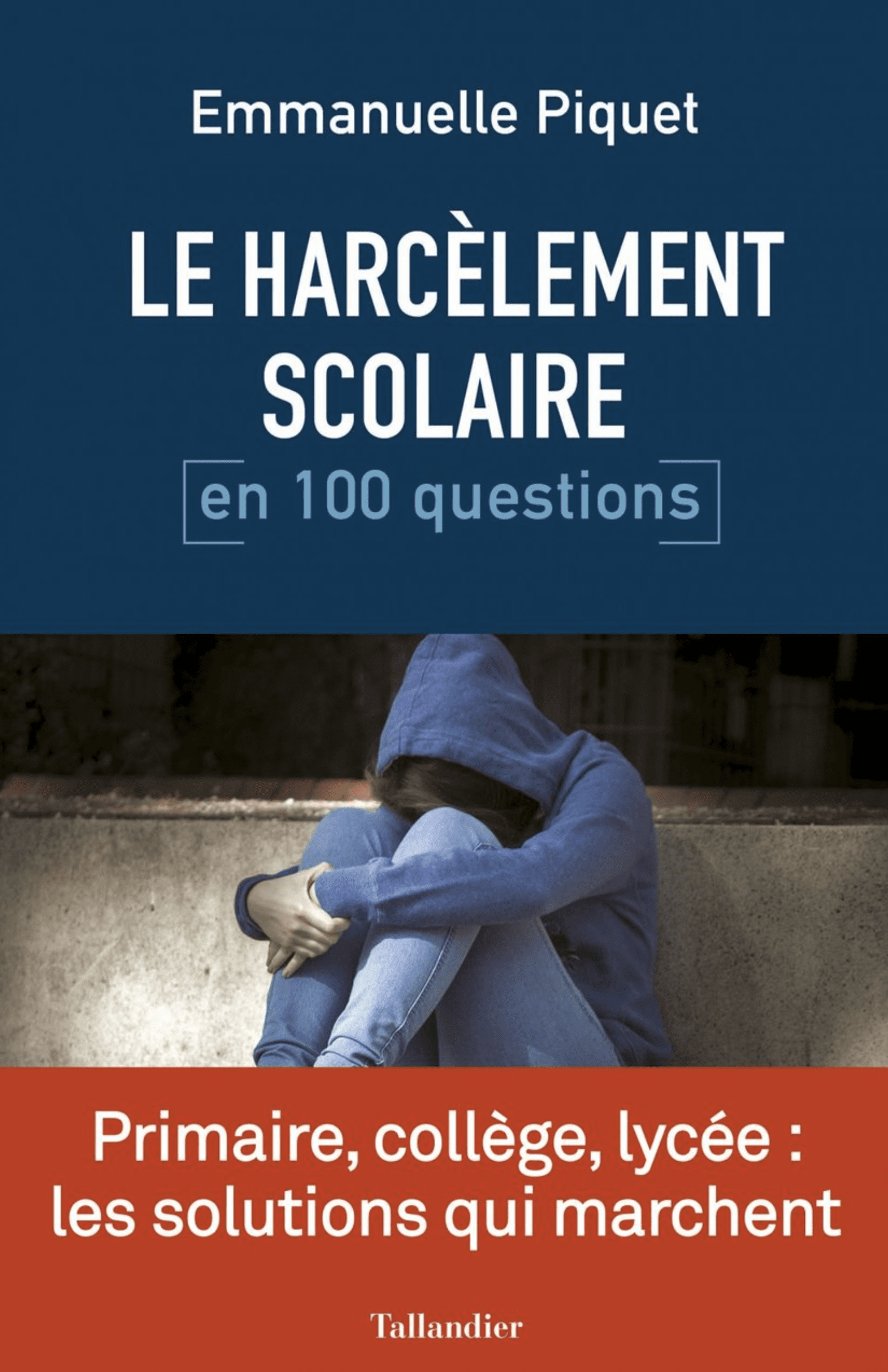
When our child suffers from bullying, we often want to call the bully’s parents. However, even if we manage to present the facts calmly (which isn’t always easy!), the other parent may feel attacked regarding their child’s behavior and react poorly, potentially making things worse. Secondly, dealing with this parent-to-parent robs the child of their own power – precisely what they need to break free from this spiral. Therapist Emmanuelle Piquet, who specializes in school bullying, is clear: the solution lies in empowering the child to stand up for themselves.
What happens at school should be handled at school.
If you see that your child is unable to manage the situation alone, despite the tools you’ve provided (see below), contact their teacher or the school administration. As we’ve said, group dynamics foster violence. In a group, actions lose accountability, and people feel less responsible for what they do. This collective behavior needs to be addressed within the school context, where these group phenomena originate.
Avoid… downplaying the issue
School bullying is not just “kids being kids.” Adults’ involvement is crucial for children to feel taken seriously. And for that to happen, they first need to be listened to, supported in their emotions, and validated in their feelings. Why? Because this will help them feel more confident, which is exactly what they’ll need to stand up for themselves. To be respected, one must feel worthy of respect.
Fighting against school bullying is a daily effort, encompassing all situations. At school, teachers should not allow one child to insult another in their presence, as this would implicitly endorse such behavior. Teachers can even inadvertently foster bullying behavior by lightly teasing a student in front of the class, thus designating a scapegoat and opening a door that other students may follow. Especially when we know that education is more about leading by example than words.
The same applies at home: our behavior should show our child that they are deserving of respect. Avoid using nicknames, stigmatizing weaknesses, or ridiculing them, even in a playful tone. Think about the way you interact as a family, how you speak to your child, and how siblings treat each other… A disparaging comment, even masked by laughter, remains a disparaging comment. A “just kidding” doesn’t erase the impact of a mockery. Has anyone ever burst out laughing when told they’re too fat/dumb/shy/slow, etc.?
Avoid… overreacting to the situation
On the other hand, parents should be careful not to overreact to school bullying. Easier said than done, you might think. But it’s crucial to separate what belongs to the child and what belongs to the parent. Our children don’t need to carry our added stress. Otherwise, they may stop confiding in us, afraid of causing alarm. Instead of expressing our worry, we can start by commending their bravery in speaking up and thanking them for trusting us. This will allow us to help.
And since children learn by example – as we can’t say enough – letting our stress overwhelm us in front of them won’t help them handle their own. If we feel truly overwhelmed, it’s a chance to demonstrate calming techniques. By calmly acknowledging that we feel stressed and intend to address it, we can model positive behavior. For instance, we might drink a glass of water, step away for a few minutes to cool down, or do a breathing exercise. Then, we can return and let them know we are now fully available to listen with the attention they deserve.
Avoid… fighting fire with fire
It’s challenging to admit, especially when we want to protect our child, but violence breeds violence. Telling them to respond with an eye for an eye won’t help. School bullies are typically people who exert power over others to cover up their insecurities. In this rough world, they’ve learned that the best defense is a good offense. So the more threatened they feel, the more they’ll lash out, creating a vicious cycle.
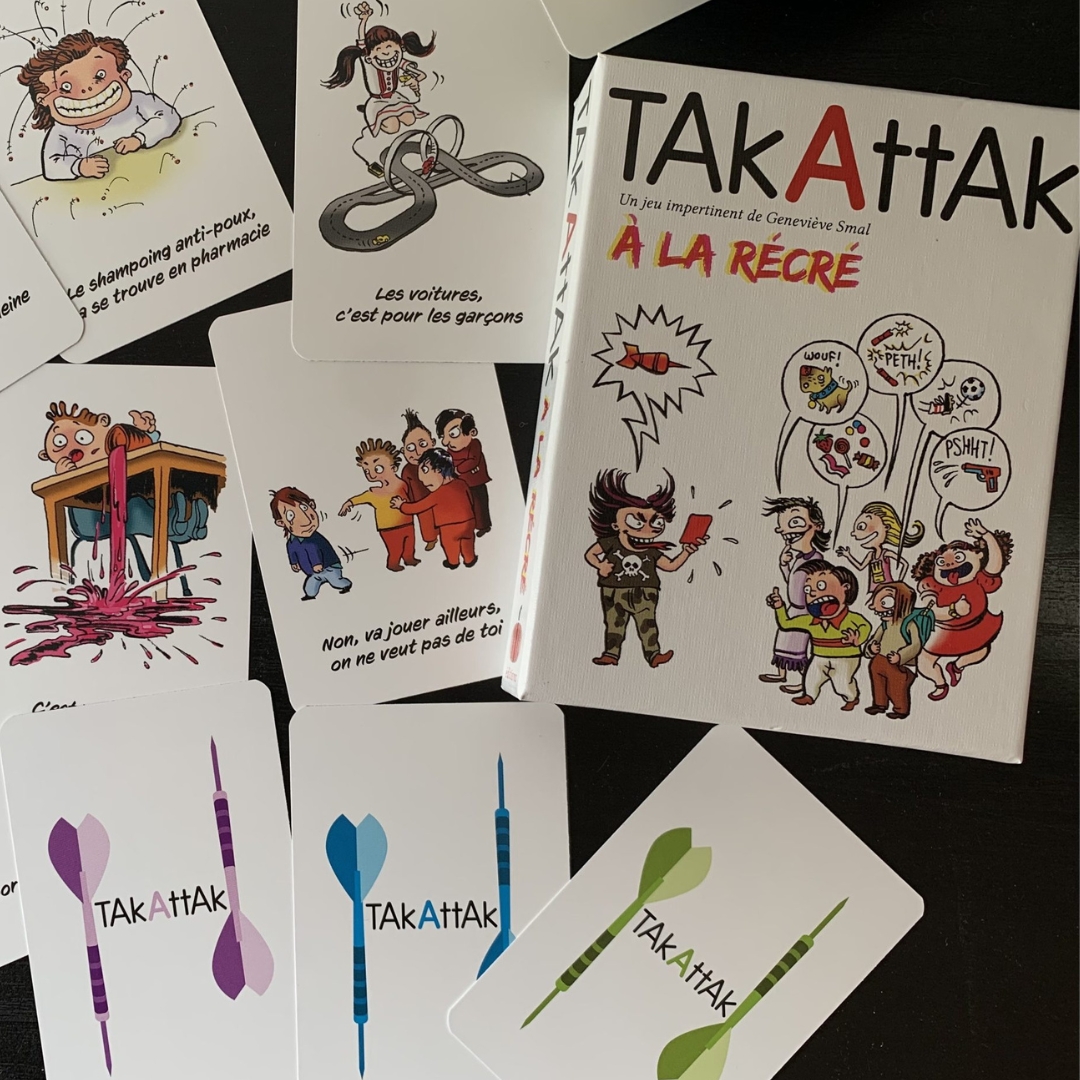
Generally, it’s better not to tell our child exactly what to say or do. They need to find their own words, which will reinforce their sense of self and ownership. Still, we can practice role-play with them, acting as the bully, so they can build confidence and come up with a response. To practice in a fun way, the “Takatakk à la récré” card game is perfect for learning not to let others walk all over them.
One strategy to consider is indifference. A confident “so what?” can be effective in shutting down bullies. Imagine a child saying, “Your glasses are so ugly!” So what? “They make you look stupid.” So what? And so on, until the bully has nothing left to say. Another approach is to use empathy, going along with the aggressor, as suggested by psychiatrist Philippe Aïm. If a bully makes fun of their outfit, the child could respond, “True, I don’t have as nice a sweater as you; mine’s a bit silly. You’re lucky to have cool clothes.” Then, they could ask, “Where did you get it?” The goal is to spark a non-violent exchange.
Ultimately, the key is to guide bullied children to find their inner strength. Hang in there, parents!