


Ramadan is the perfect time to explore—or rediscover—the museums in Morocco. With recent openings and stunning renovations, the cultural landscape has never been richer. From north to south, here’s our selection of must-visit spots to reignite your love for the arts and history.
Casablanca: Villa Carl Ficke, a memory capsule of the city
Casablanca has a new gem for history lovers. Opened in late February 2025, the Casablanca Memory Museum traces the city’s history from the early days of Anfa to the Art Deco era and even its football culture. Housed in Villa Carl Ficke—a stunning architectural jewel reminiscent of an Italian palace built in 1913—the museum offers a deep dive into the city’s past. The villa has changed hands over the years, belonging to Germany, then France, and finally Morocco, and now hosts historical documents and works from the Casablanca School of the 1960s and 70s. The restoration of the once-abandoned villa and its gardens was led by Moroccan architect and anthropologist Salima Naji, who also introduced the country’s first “material library,” showcasing the secrets of heritage conservation.
During Ramadan 2025, entry to the Casablanca Memory Museum is free.
Rabat: The Chellah site, a journey through time
Reopened in 2024, the Chellah is a must-see historical site in Morocco’s museum capital. Spanning over 7,000 square meters, it offers a glimpse into 2,000 years of history, from the Roman ruins of Sala Colonia to the medieval Merinid necropolis. Visitors can wander through the remains of the Khalwa Mosque’s grand arcades and the fortress walls, punctuated by 23 watchtowers, which enclose a vast garden designed in the 20th century by architect Maurice Tranchant de Lunel. Towering above the ruins, white storks have made this historic landmark their home. For budding archaeologists, the Chellah remains an active excavation site, where new discoveries continue to be unearthed.
One of the biggest additions since its reopening is its culinary offerings. The Patio restaurant now occupies the former palace foundouk, while the Ciconia café provides breathtaking views of the gardens, with a menu curated by Chef Hicham Aouad. Throughout the year, the Chellah hosts cultural events such as the Jazz au Chellah festival and Mawazine.
For Ramadan 2025, the Chellah is one of the museums in Morocco featuring a special program, “Celestial Nights,” with pottery workshops, nighttime photography sessions, and a specially crafted ftour menu.
Marrakech: A world of beauty at the Museum of Adornment Arts
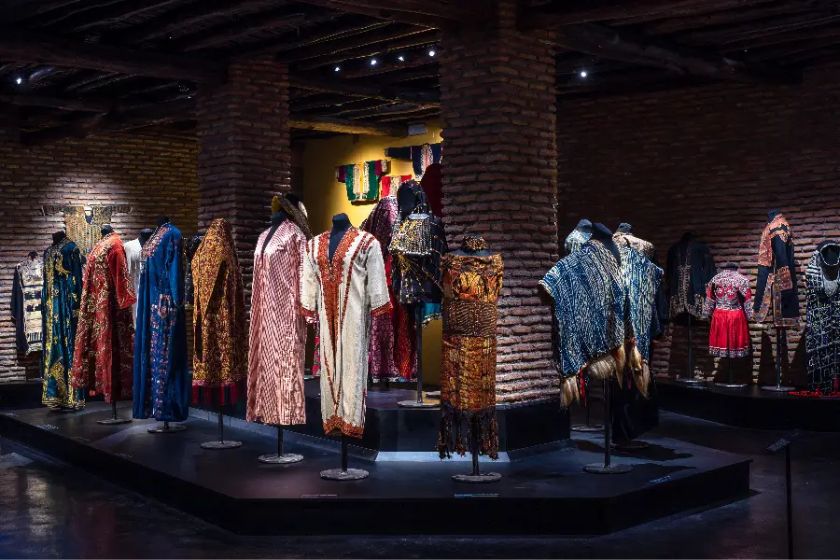
One of the most visually striking museums in Morocco, the Museum of Adornment Arts, opened in winter 2023, is a true masterpiece. Designed by renowned Franco-Lebanese architects Michel Charrière and Joseph Achkar, the museum is housed within a collection of riads in the Kasbah district, near the Badii Palace and Saadian Tombs. Centered around an octagonal courtyard that floods the space with light, it showcases the remarkable collection of Swiss art lovers Marlène and Paolo Gallone.
Over 40 years, the couple amassed thousands of pieces, 3,000 of which are displayed at the museum. The three levels, with exposed brick walls and polished concrete floors, are bathed in dim light, making the adornments, ornaments, and ceremonial garments stand out. Each item was chosen for its “emotional power” and originates from Africa, Central Europe, and Asia.
The top floor houses one of Morocco’s most extensive Berber jewelry collections, presented on a striking background—a river of minerals displayed under glass, symbolizing the natural inspiration behind these rare pieces.
The museum’s rooftop terrace, designed by Panpriape, a landscape design firm specializing in ecological gardens, features Shams, a café-restaurant blending Levantine and Mediterranean cuisine, with an unrivaled view of the Atlas Mountains and the Koutoubia Mosque.
Read also : JEWELRY: MIMIA LEBLANC UNVEILS SHAAD, IN COLLABORATION WITH MADIHA CHEBAA
Tangier: Donabo Botanical Gardens, a seaside sanctuary
The Donabo Gardens, a public botanical park founded by private owners, opened in 2022 as a heartfelt family tribute. For co-founder Lalla Malika El Alaoui, the space is filled with memories of her late father. Years later, she transformed the family land into an open garden for all to create new memories together.
With the help of Paul Belvoir, a British artist and decorator who fell in love with Tangier, they designed this exceptional space overlooking the sea. Nestled along the Cap Spartel road, within the Rmilat forest, Donabo Gardens is dedicated to organic cultivation. Flowers, fruits, vegetables, herbs, trees, and shrubs make it a sensory museum of local and international flora.
The Mint Labyrinth leads to the Japanese Garden, complete with a pond and a small stone bridge, before opening onto the rose garden and vegetable patch. The latter supplies the Donabo Gardens café-restaurant, which serves seasonal dishes, as well as the shop, where visitors can find artisanal preserves and jams. This one-of-a-kind museum also hosts cooking classes, Andalusian music concerts, and lectures. A particular highlight is the annual Tomato and Chili Festival in summer, which celebrates these plants in all their uses. .
Fes: Al Batha Museum, a palace of dreams
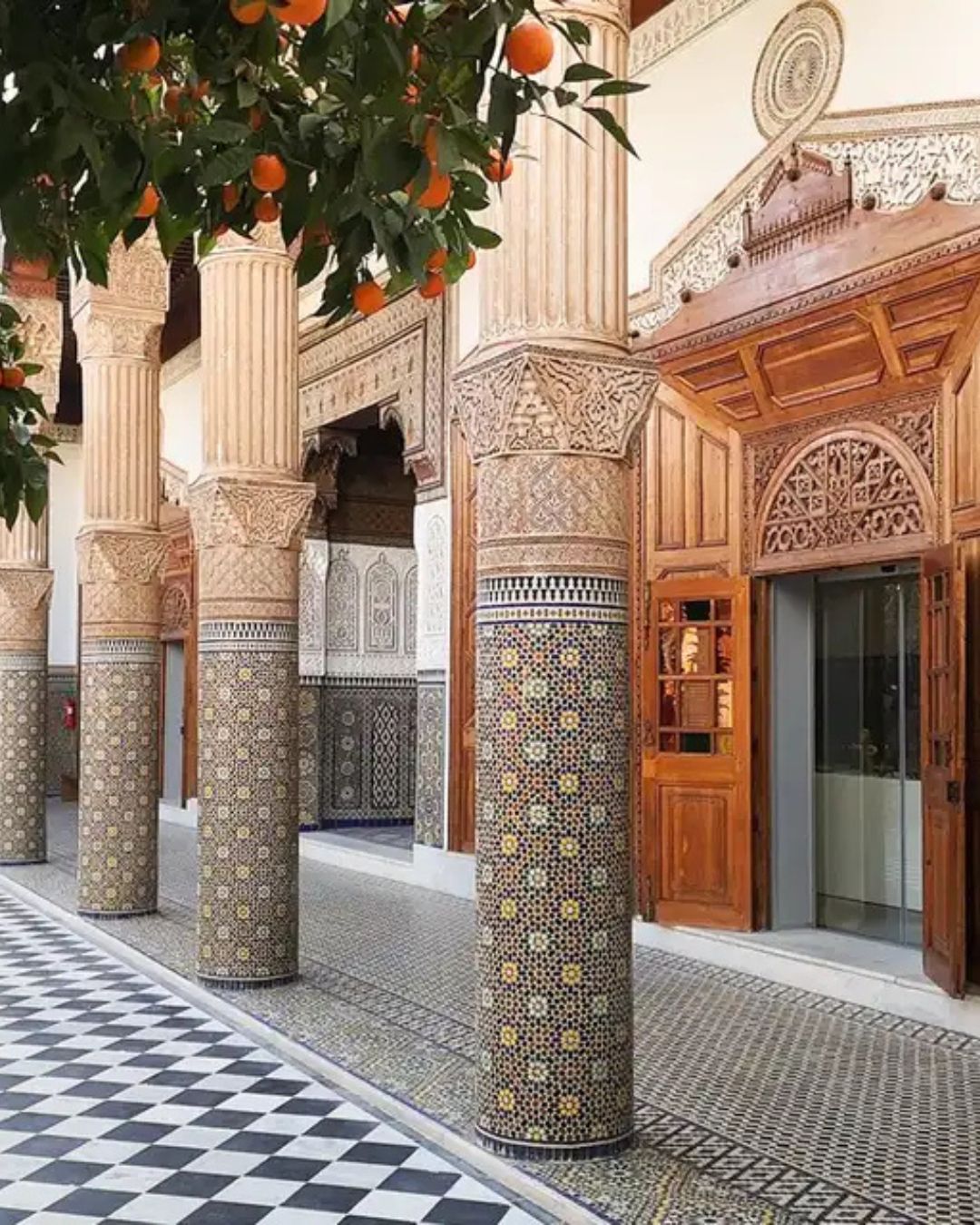
A beloved landmark for both locals and tourists, the Al Batha Museum is one of Morocco’s recently reopened cultural treasures, welcoming visitors again in February 2025 after years of restoration. Once a royal palace of the Alaouite dynasty, this stunning Hispano-Moorish residence—modeled after the grand Andalusian palaces—has served many purposes since its construction under Sultan Hassan I. It was the childhood home of Sultan Moulay AbdelAziz, who later experimented with early photography here. During the French Protectorate, it became an ethnographic museum in 1915 before being classified as a national monument. Today, thanks to Morocco’s National Foundation of Museums, it has been transformed into the Museum of Islamic Arts, featuring an extraordinary collection.
 Fes is renowned as the capital of traditional craftsmanship, and the Al Batha Museum pays homage to this heritage. Out of the 7,000 artifacts it holds, 700 masterpieces are on display, ranging from astrolabes to beautifully calligraphed manuscripts. One of the highlights is the rare “Adouate Al Andalous” minbar, one of the few preserved examples of its kind in the world. But the showstopper is undoubtedly the room dedicated to Moroccan ceramics, showcasing exquisite examples of the famous “Fes blue” pottery.

Adding to its charm, this vast palace is surrounded by a magnificent garden, perfect for a leisurely stroll. Paved with intricate zellige mosaics, the pathways lead to a towering, century-old green oak tree, with several shaded resting spots by the fountains. In springtime, jacarandas and mimosas bloom alongside palm trees, orange groves, and aromatic plants, creating an oasis of tranquility.
Picture (c) : Monde des Arts de la Parure